RedAlert - צבע אדום
- 4.6
- Rating
- 1.00M
- Installs
- Free
- Price

 Analysis by App-foxy
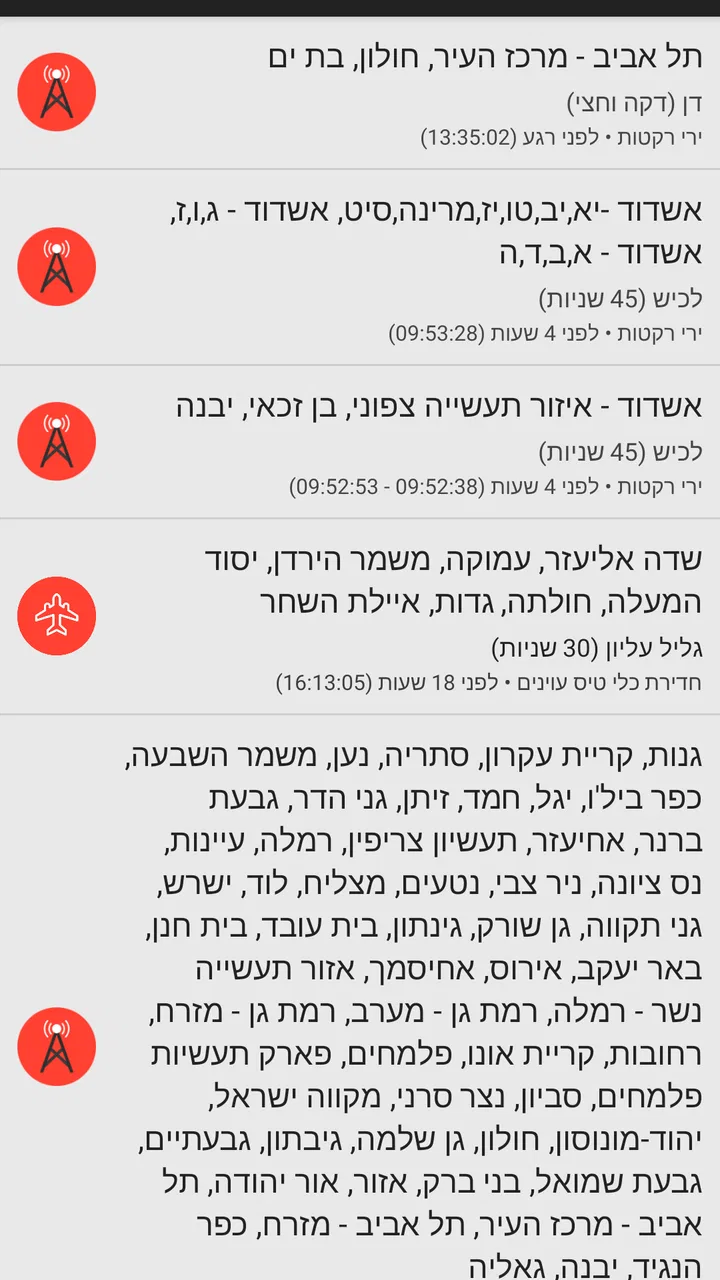
When an emergency alert app matters, the first question is not whether it looks polished. I want to know whether it can become part of my routine without making me second-guess every notification. RedAlert - צבע אדום is built for that very specific need in Israel: receiving emergency alerts quickly and reliably rather than relying only on television, social media, or messages passed between people.
I reviewed it as a practical news and alerts app, not as something I would casually browse during spare time. That distinction is important. Its value appears when I need timely information, when I am away from a television, or when I want an alert channel that stays focused on emergency events. The app is free to install, aimed at Everyone, and developed by Elad Nava. It has reached more than a million installs and holds a 4.6 average from roughly 28 thousand ratings, which suggests that many users consider it useful enough to keep on their phones.
What I would look for before relying on an emergency alert app
My decision starts with the alert itself. A useful emergency app has to be understandable under stress, easy to leave enabled, and relevant to the places that matter to me. I would also consider whether it complements or replaces other information sources. No single phone app should be treated as the only safety measure, but an app that delivers focused alerts can still be an important layer in a wider routine.
You May Also Like

 Blood Strike: 2.5 Anniversary
Blood Strike’s Loadouts Turn Every Drop Into a Tactical Gamble
A close look at Blood Strike’s custom loadouts: how fast access to signature weapons reshapes its battle royale rhythm, rewards preparation, and narrows the gap between fights.

 Pandora - Music & Podcasts
Pandora’s Music Is Easy to Start, but Harder to Recover
Pandora’s strength is its low-effort path from a seed to a station. Its weak spot is how much confidence it asks you to place in connection, setup, and quiet recovery.

 8 Ball Pool
 Is Built on Rivalries, Rematches, and Routine
A close look at the rivalries, rematches, shared routines, and unanswered safety questions that turn a quick pool match into a persistent mobile community.

 Samsung Music
’s Quiet Strength Is Playing What You Already Own
Its reach comes less from spectacle than from dependable access to a personal library. That simplicity is both the app’s strongest retention engine and its ceiling.

 AccuWeather: Weather Radar
AccuWeather Review: A Quick, Clear Forecast for Everyday Decisions
For everyday plans, the best forecast is the one you can understand quickly. AccuWeather makes rain timing, radar, and local conditions easy to act on, with a few trade-offs.

 Hill Climb Racing
Why Hill Climb Racing Still Turns Crashes Into One More Run
A tiny car, a bumpy hill and one more upgrade: Hill Climb Racing keeps resurfacing because its simple chaos makes every near-miss feel personal.
More From Our News Desk



RedAlert is especially suitable for someone who wants a dedicated emergency-alert experience instead of a general news feed. General news apps can provide context, but they often mix urgent information with headlines, opinion, sports, and advertising. That can make it harder to notice the one message that needs immediate attention. Here, the purpose is much narrower, and that narrow purpose is one of its strongest qualities.
I would also think about language and familiarity. The app’s name includes the Hebrew phrase צבע אדום, and its focus is clearly tied to Israel’s emergency-alert environment. Someone living in Israel, visiting regularly, or keeping informed about a particular area may find that focus useful. Someone looking for a worldwide disaster tracker, a broad breaking-news service, or a multilingual news reader may find a different category of app more appropriate.
How I would set it up for everyday use
I would install it before an emergency, open it calmly, and make sure I understand how its alerts appear on my phone. That preparation matters more than exploring every screen. I would then check the phone’s notification settings and system sound controls, because an alert app can only be useful if the operating system allows its notifications to be noticed.
A practical habit is to keep the app as a focused channel rather than constantly opening it to look for reassurance. If I am at home, I can use it alongside official instructions and familiar safety arrangements. If I am commuting, working, or caring for children, I would want the alert to be something I can recognize quickly without first sorting through a long stream of unrelated updates.
One non-obvious trade-off is that a dedicated alert app can reduce information overload while also making the user more dependent on correct setup. A general news application may be less focused, but I might already know how its notifications behave. With RedAlert, I would spend a few minutes learning its alert behavior and then avoid changing notification settings casually. That small preparation is part of the cost of using a specialized tool.
A realistic situation where the focused approach helps
Imagine I am working from home with headphones on while my phone is across the room. A television is not running, and a social network feed is open only occasionally. In that situation, a focused emergency alert app can be more useful than waiting for a headline to appear in a general news service. The benefit is not entertainment or detailed reporting; it is having a direct channel that fits an urgent moment.
Another example is a family member who does not follow live news throughout the day but still wants alerts relevant to daily life. I would recommend using the app as part of a simple household plan: keep the phone charged, keep notifications visible, and know what to do after an alert arrives. The app can provide the prompt, but it cannot replace preparation or official safety guidance.
For travel within Israel, I would treat the app as a useful companion rather than a substitute for local awareness. A visitor may not know the geography, terminology, or appropriate response procedures. In that case, the app is most helpful when paired with advice from local authorities or a host who understands the area. The alert may be immediate, but the correct response still depends on context.
Where RedAlert stands out from ordinary news apps
The clearest strength is concentration. RedAlert is not trying to be a complete newspaper, a social timeline, and an emergency tool at the same time. That makes its role easy to understand. I can open a normal news app when I want background and analysis, but I would choose a dedicated alert app when the priority is noticing a relevant emergency message without digging through unrelated content.
Its long availability also matters in a practical sense. The app was released in July 2014, and the current version is 1.0.101. I would not treat age alone as proof of quality, but an app that has remained available across many years can be easier to justify than an unknown tool with no established user base. It supports Android devices running version 5.0 or later, so compatibility is broad for many existing phones, although anyone using an older device should check that requirement before planning around it.
The large install base and strong average rating give me some confidence that the app has found a real audience. They do not guarantee that every alert will arrive in every circumstance, and they do not replace testing the app on my own phone. Still, they make it more credible as a dedicated option than a newly discovered application with little visible history.
I also like the fact that the app is free to start using. That removes a major barrier for someone who wants an emergency-alert channel but does not want to commit money before understanding whether it fits their routine. There are in-app purchases ranging from $2.49 to $54.99 per item, so I would pay attention to any optional purchase screen and decide whether the free experience already meets my needs.
Useful habits that are easy to overlook
First, I would not judge the app only by how quickly I can open it. In an alert situation, the important path may begin with the notification, not the app interface. I would therefore test my own attention flow: where the phone is usually placed, whether sound is audible, and whether work or sleep settings might suppress what I need to notice. This is a phone-use issue, but it directly affects the value of RedAlert.
Second, I would avoid treating repeated checking as a safety strategy. Constantly opening an alert app can increase anxiety without improving readiness. A better workflow is to configure a dependable notification routine, keep official instructions accessible, and use the app when an alert appears or when I deliberately need to review information. That makes the tool part of a plan rather than the center of the day.
Third, I would explain the app to other people in my household instead of assuming they will understand it automatically. If a child, older relative, or guest sees an alert, they may need simple guidance about what it means and what action comes next. The app can be installed on more than one person’s phone, but the real advantage comes from shared understanding, not from collecting duplicate notifications without a plan.
These details are why I see RedAlert as more than a download decision. It is a small part of a communication routine. The app can be valuable, but only when the phone, the user, and the household response are prepared together.
When a different kind of app may be better
RedAlert is not the right choice for every reader. If I mainly want national and international headlines, live reporting, interviews, maps, and broader context, I would choose a full news application instead. Those services are better for understanding what has happened and why. A focused emergency-alert app is better at keeping its purpose narrow, but that also means it is not a replacement for journalism.
I would also look elsewhere if my main need were weather warnings, earthquakes, wildfire tracking, or international travel advisories. Those are different alert categories with different information needs. Choosing an app simply because it sends notifications would be a mistake; the important question is whether its subject matches the risk I am trying to monitor.
Someone who dislikes urgent notifications or finds them stressful may also prefer a quieter news workflow. That does not make RedAlert poor; it means the user should think carefully about whether an emergency channel will help them act or merely encourage repeated checking. For some people, an official service combined with a phone’s built-in emergency settings may be a better fit, depending on their location and personal routine.
There is also a difference between a dedicated alert tool and a community-based information service. A community feed may offer discussion and local observations, while RedAlert’s appeal is its focused role. Community information can add context, but it can also be noisy or unverified. I would not use informal posts as a substitute for an alert system, and I would not expect a focused alert app to provide the conversational detail of a community platform.
The real switching cost
Moving from a general news app to RedAlert is easy in terms of installation, but the habit change is more important. I would need to decide which app handles urgent alerts, which one provides background, and which official channels I trust for instructions. If I keep all of them active with identical notification sounds, the result may be confusion rather than protection.
Moving in the opposite direction can create a different problem. If I remove a dedicated alert app and rely only on a general news service, I may gain more context but lose the simplicity of a focused channel. That trade-off is acceptable for someone who rarely needs Israel-specific emergency alerts, but it is less attractive for a person whose daily life is connected to the areas the app is designed to cover.
The purchase structure is another small consideration. Since the app is free and optional in-app items cost between $2.49 and $54.99, I would not pay automatically just because a purchase is offered. I would first use the basic experience, understand what I actually need, and make sure any paid option solves a real problem rather than adding complexity. This is especially important for an app whose core purpose is urgent communication.
Privacy and battery concerns also deserve a sensible approach, even without turning the review into speculation. I would read the app’s current permission prompts carefully, keep the operating system updated, and watch how the phone behaves after installation. If notifications are delayed, missing, or too disruptive on my particular device, I would investigate phone settings and compare the experience with an official alternative before relying on it.
My recommendation for different kinds of users
I recommend RedAlert to people in Israel who want a dedicated emergency-alert app and are willing to set it up thoughtfully. It is especially compelling for users who do not keep live television or a news feed open all day, but still want a focused way to notice urgent information. The free entry point, broad Android compatibility from version 5.0 onward, and established audience make it easy to try without a major commitment.
I would recommend it less strongly to someone who wants one application to cover every kind of breaking news. That person should use a general news service, possibly alongside an official alert channel, because RedAlert’s focused purpose is also its limitation. It is not designed to replace analysis, long-form reporting, or a complete news homepage.
Before relying on it, I would complete three simple checks. I would confirm that my phone supports the required Android version, make sure notifications and sound behave as expected, and decide what I will do when an alert arrives. I would also tell the people around me how I intend to use it. Those steps are more valuable than merely installing the app and assuming the job is finished.
After using it as part of that routine, my view is positive but measured. The app’s strongest feature is not extra content; it is the discipline of keeping emergency alerts at the center. That makes it more practical than a normal news reader for a specific situation, while also making it unsuitable as a universal information source.
For me, the final decision is straightforward: if Israel-specific emergency alerts are relevant to your life, RedAlert is worth trying as one layer of your safety setup. Its 4.6 average and more than a million installs support that recommendation, but personal testing still matters. Keep official guidance close, avoid relying on one channel alone, and treat the app as a focused aid. Used that way, it is a sensible free addition for the right reader rather than a product I would recommend indiscriminately.
FAQs for RedAlert - צבע אדום
01What is RedAlert - צבע אדום and how does it work?
RedAlert - צבע אדום is a mobile application designed to provide real-time alerts and notifications about emergencies or threats in your area, such as missile attacks. It uses your device's GPS to deliver precise location-based alerts, ensuring you're informed of any potential dangers as soon as they occur.
02Is RedAlert - צבע אדום available for both Android and iOS?
Yes, RedAlert - צבע אדום is available for download on both Android and iOS platforms. You can easily find it on the Google Play Store for Android devices and the Apple App Store for iOS devices. It ensures compatibility with a wide range of devices, providing accessibility to all users.
03How reliable are the alerts provided by RedAlert - צבע אדום?
The alerts from RedAlert - צבע אדום are sourced from official channels and are known for their reliability. The app updates in real-time, meaning you receive notifications almost immediately when an emergency occurs. However, users should ensure their device settings allow for constant connectivity to not miss any critical updates.
04Does RedAlert - צבע אדום consume a lot of battery or data?
While RedAlert - צבע אדום runs in the background to provide timely alerts, it is optimized to minimize battery consumption. Data usage is also kept minimal as the app primarily functions through push notifications. However, frequent location tracking can slightly impact battery life, so users may adjust settings accordingly.
05Is it possible to customize the notifications in RedAlert - צבע אדום?
Yes, RedAlert - צבע אדום allows users to customize alerts based on their preferences. You can choose specific locations to receive alerts for, adjust the alert sound, and decide how frequently you want to receive notifications. This customization ensures that you only receive the information that's most relevant to you.
Pros
- Real-time alerts for immediate response.
- User-friendly interface with clear navigation.
- Customizable notifications for specific areas.
- Reliable performance with minimal glitches.
- Battery-efficient operation for prolonged use.
Cons
- Limited language support beyond Hebrew.
- Requires constant internet connection.
- No offline alert storage available.
- Occasional delays in alert delivery.
- Limited visual customization options.

RedAlert - צבע אדום
Gallery